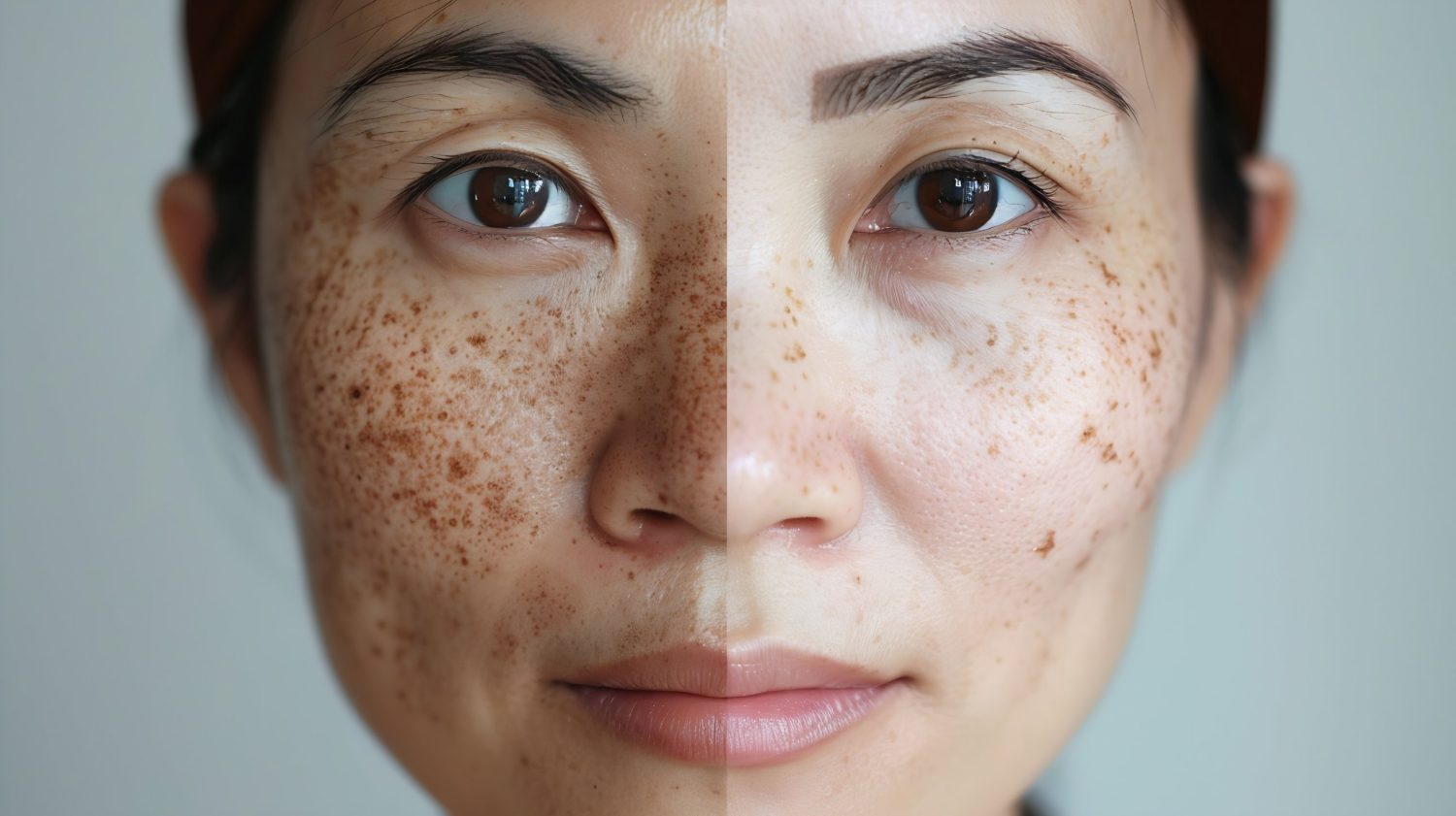
Summary:
Your skin may look less even, feel rougher or seem firm than before. These changes can have different causes, from dryness and sun exposure to acne-related changes and gradual skin ageing.
A skin rejuvenation treatment should address the concern identified during assessment.This guide helps you understand your skin rejuvenation treatment options and practical considerations before you walk into a clinic.
Skin rejuvenation is a broad term for treatments that improve the quality, tone, and texture of the skin by working at a structural level rather than simply on the surface. Skincare and sun protection also remain part of the plan.
In practical terms, it typically targets four overlapping concerns:
One treatment may improve more than one concern. A combination may be appropriate when concerns need different approaches, but additional procedures are not automatically necessary.
Depending on the treatment and diagnosis, possible benefits include more even tone, smoother texture, improved hydration and less noticeable fine lines or selected acne scars. Some procedures may improve mild laxity, but skin quality treatment is not equivalent to surgical lifting.
Brown post-acne marks, red marks and indented scars are different concerns. Their treatments should be selected accordingly. Melasma and inflammatory skin conditions may need oral or topical medication before a rejuvenation procedure is considered.
Results vary. Some changes develop after one session, while others require a series and gradual collagen remodelling. No treatment guarantees flawless skin, permanent pore closure, or complete scar removal.
These are useful categories, but they overlap and do not describe every rejuvenation treatment.
Resurfacing creates controlled treatment zones to support renewal and trigger controlled regeneration, encouraging the production of newer, healthier tissue. Fractional CO2 removes microscopic columns of tissues and produces surrounding thermal injury without the same pattern of tissue removal. Intensity influences both the result and recovery.
Collagen stimulation works deeper in the dermis (the structural layer beneath the surface), using controlled injury or another biological stimulus to encourage new collagen and elastin production. A study published in the American Journal of Pathology found that collagen production by dermal fibroblasts declines measurably with age, contributing to the visible and structural changes associated with skin ageing over time. Treatments that stimulate collagen production aim to compensate for this gradual loss. RF microneedling combines needle penetration with radiofrequency heat at selected depths. Depth and energy should follow anatomy and treatment goals; deeper settings are not automatically more effective or appropriate for older patients.
Skin boosters and related skin-quality injectables differ in composition and purpose. Hyaluronic acid products primarily support hydration and skin smoothness, while polynucleotide products are used for skin-quality concerns. A 2026 systematic review of randomised clinical trials found that polynucleotide therapies improved wrinkle-related outcomes, skin hydration, and patient-reported satisfaction. ECM-based injectables form a distinct category and should not be described as simply replacing everything aging skin has lost.
Delivery matters. Some treatments are injected, while others are applied with microneedling or used topically. They should not all be described as ingredients injected directly into the dermis. Your doctor should explain the specific product, method and evidence behind the recommendation.
|
Treatment |
Mechanism |
Best Suited For |
Downtime |
|
Fractional Ablative resurfacing |
Selected depressed acne scars, uneven texture and fine lines |
One to two weeks |
|
|
Radiofrequency microneedling |
Selected scars, uneven texture and mild laxity |
Two to five days |
|
|
Radiofrequency microneedling |
Texture, pore size, firmness |
Redness, swelling or pinpoint crusting may occur; recovery depends on the protocol |
|
|
Human acellular dermal matrix-based injectable containing ECM components |
Skin quality, hydration, radiance |
Three to five days; bruising may last longer |
|
|
Skin Boosters (PN Healer, Watershine, RD1 HA and more) |
Product-dependent skin-quality injections |
Hydration, fine lines and selected skin-quality concerns |
Redness, swelling, injection bumps or bruising may last several days |
|
Full Pico + Full Yellow Laser |
Coexisting pigmentation and vascular redness, with texture treatment where appropriate |
Approximately three to five days, depending on settings and response |
Fractional CO2 laser creates microscopic columns of tissue removal and thermal injury. Improvements develop through healing and subsequent collagen remodelling.
Morpheus8 uses radiofrequency energy with microneedling to stimulate collagen and remodel deeper tissue. Cheongdam also offers Morpheus8 Resurfacing for surface texture alongside the deeper remodelling.
Golden X RF Microneedling delivers collagen-stimulating results with minimal downtime. The Skin ReSet ECM Booster is an injectable based on human acellular dermal matrix, containing ECM components such as collagen, elastin and glycosaminoglycans.
PN Healer, PN HB Plus and hyaluronic acid-based boosters such as Watershine Dewy Booster, RD1 HA Booster have different compositions and intended uses.
PN Scar may be considered for selected scar concerns after assessment.
The Diamond Glow Laser programme combines Full Pico and Full Yellow Laser, targeting pigmentation, redness, brightness, tone, and overall luminosity.
Not sure which treatment suits your skin? Book a consultation at Cheongdam Aesthetics for a personalised assessment of your concerns and treatment options.
Skin rejuvenation is not one-size-fits-all. Start with the main concern and diagnosis. Age and primary concern are the two most useful starting points.
Mid-20s to early 30s: Prevention and maintenance
Focus: sun protection, suitable skincare and any existing concerns such as acne, pigmentation or dryness.
Consider: Whether skincare or medication management is sufficient before a procedure. Injectables (PN Healer, Watershine Dewy Booster)and energy-based treatments such as Golden X RF Microneedling may be recommended.
Mid-30s to mid-40s: Collagen support and correction
Focus: Specific changes you notice, which may include fine lines, uneven tone or reduced firmness.
Consider: A targeted treatment if appropriate, with combinations reserved for distinct concerns that justify them. Morpheus8, Skin ReSet ECM Booster, CO2 laser may be recommended for fine lines, uneven skin tone and textural concerns. Ultherapy Prime, XERF or Ultraformer MPT may be recommended for reduced firmness.
Late 40s and beyond: Firming and structural restoration
Focus: Distinguish skin texture and quality from volume loss or more substantial laxity
Consider: Lasers or RF microneedling for texture,Morpheus8 for selected firmness concerns, fillers for volume loss, and collagen biostimulators to support gradual improvements in firmness and structural support. Targeted skin boosters may complement the plan. Treatment settings and recovery intervals should follow individual assessment rather than age alone.
Whatever your age, the assessment should include skin tone, pigmentation risk, previous procedures, medicines and scarring history and recovery preferences.
Skin rejuvenation results are cumulative. Hydration or skin-smoothness changes may become noticeable after initial injection effects settle, while scar and firmness improvements may develop over weeks to months.
There is no universal two-to-four session programme. Your doctor should recommend session numbers, spacing and review points according to the treatment and your response. Maintenance may be useful for some concerns, but should have a clear purpose.
Sun exposure contributes to premature skin ageing. A 2024 review co-authored by researchers from A*STAR’s Skin Research Laboratory in Singapore confirms that UV radiation is a primary driver of premature skin ageing, accelerating the epigenetic changes and structural protein breakdown that underlie photoageing. Use broad-spectrum SPF50, seek shade and use protective clothing. A suitable skincare routine also helps maintain skin comfort and quality.
No rejuvenation treatment can fully compensate for unprotected sun exposure. Ongoing skincare, maintenance sessions, and consistent sun protection are what allow results to last.
Patients who approach treatment as a long-term investment tend to be more satisfied than those expecting a permanent fix from a single session. Discuss the likely duration, maintenance costs and practical limits of the proposed treatment before proceeding.
In most cases, no. Resurfacing improves surface texture but does not restore hydration. Collagen stimulation firms but may not address pigmentation. Skin boosters hydrate but do not resurface. A combination is considered when each component has a clear role and its potential benefit justifies the additional cost, recovery and risk.
The cost of skin rejuvenation in Singapore varies depending on treatments selected, products, treatment areas and number of sessions. Contact Cheongdam Aesthetics directly for an accurate, personalised quote.
Downtime varies by treatment:
These are estimates. Bruising, redness or sensitivity can persist beyond initial social downtime. Follow the clinic’s aftercare instructions and avoid picking at crusts or peeling skin.
Yes. Inadequate spacing between active sessions can impair healing and may increase inflammation, infection increase the risk of PIH, and produce the opposite of the intended result. A responsible skin rejuvenation programme sequences treatments with appropriate intervals.
Ask the doctor to explain timing and precautions. RF microneedling also carries risks of burns and unintended tissue injury, while injectables have product-specific risks that should be discussed during consent.
Different concerns may respond to different approaches. Because skin ageing is multifactorial. No single device addresses collagen loss, texture, pigmentation, and hydration simultaneously. Combining technologies allows each skin rejuvenation treatment to do the job it is most suited for, often at more conservative settings.
Choosing the right treatment for the right reason at the right time begins with understanding your skin concerns and what you hope to improve – that’s what drives the approach at Cheongdam Aesthetics. The starting point is always your skin, not a treatment menu. Protocols are developed with a Korean clinical advisory team and delivered by accredited doctors.