

Fractional CO2 Laser is a skin resurfacing treatment that may improve the appearance of acne scars, uneven texture, enlarged pores and fine lines.
At Cheongdam Aesthetics, all laser treatments are performed by our doctors. Treatment settings are personalised to your skin condition, scar type and recovery needs. During consultation, our doctors will explain your suitability, expected outcomes, downtime and proposed treatment plan.
What is a Fractional CO2 laser?
CO2 laser is a medical-grade laser treatment used for skin resurfacing and acne scar management. It delivers controlled laser energy into the skin to improve uneven texture, acne scars, enlarged pores, fine lines and overall skin quality.
CO2 laser is performed using fractional technology, which treats selected areas of the skin while leaving surrounding tissue intact. This supports collagen renewal and skin regeneration while allowing for planned healing and recovery. This is what separates fractional treatment from fully ablative resurfacing, which treats the entire skin surface within the treatment area, fractional treatment leaves intervening areas untreated.
At Cheongdam, CO2 laser treatments are carefully customised based on skin condition, scar type and recovery tolerance, with a focus on safety and realistic outcomes.
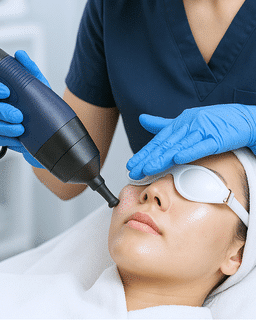
How fractional CO2 laser works
Fractional skin resurfacing
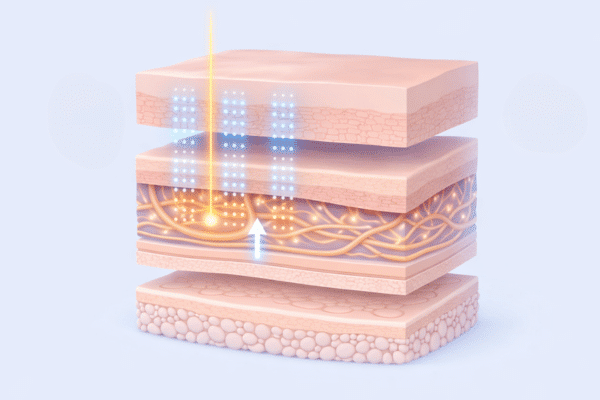
Fractional CO2 laser creates thousands of microscopic treatment zones in the skin, leaving surrounding areas untouched. This fractional approach helps stimulate skin renewal while allowing untreated skin to support faster healing and recovery.
Controlled thermal stimulation
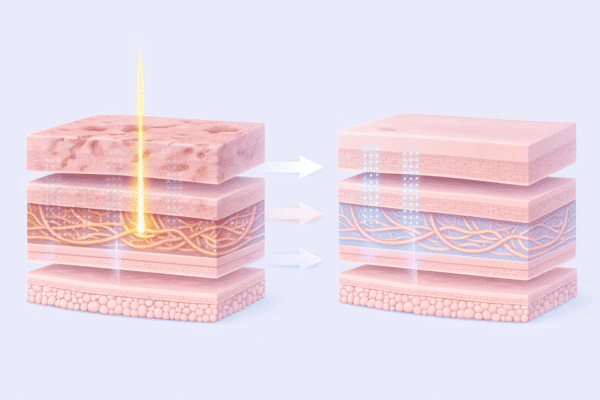
The laser energy generates controlled heat within the skin, prompting the body’s natural healing response. This process stimulates collagen and elastin production, which helps improve acne scars, skin texture and fine lines over time.
Progressive skin remodelling
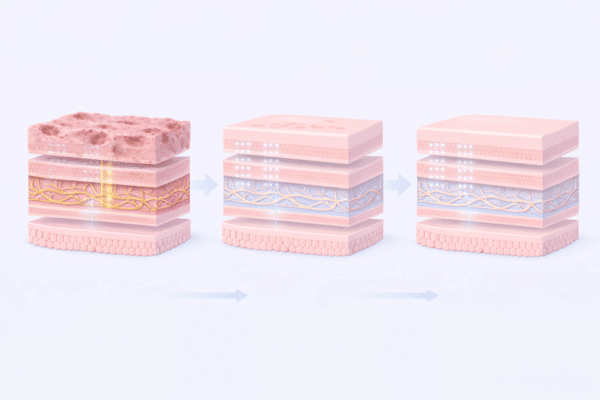
As the skin heals, damaged surface layers are replaced with newer, healthier skin. With appropriate spacing between sessions, this leads to progressive improvement in skin texture, pores, firmness and overall appearance.
Who is fractional CO2 laser suitable for?
CO2 laser can be performed across a range of skin types and tones, but you should see a doctor for confirmation. Settings are adjusted to your skin type, the depth of the concern being treated and your medical history. The treatment is most often considered for the following concerns.
Concerns
The number of sessions required depends on your skin concern and its severity.
01
Acne scarring
- Boxcar scars
- Rolling scars
- Selected ice-pick scars
These three are grouped together as atrophic scars, meaning scars that sit below the level of the surrounding skin.
02
Skin texture
- Rough skin surface
- Irregular texture
- Post-acne changes
03
Enlarged pores
- Visible pores
- Thickened skin
- Loss of smoothness
04
Early signs of ageing
- Fine lines
- Mild skin laxity
- Loss of firmness
05
Sun damage
- Uneven skin tone
- Rough/Uneven Texture
06
Skin rejuvenation
- Smoother skin
- Improved clarity
- Refined appearance
Who this treatment may not suit
CO2 laser is not right for everyone, and there are situations where treatment is better postponed than ruled out. Treatment is generally deferred:
- if you have active inflammatory acne, infection or open wounds in the area to be treated
- If you are currently or recently used medication that requires review, including oral isotretinoin (a prescription oral acne medication)
- if you have had significant sun exposure in the weeks before your appointment
- If you have history of poor wound healing, keloids or other relevant medication conditions
Uncertain about your concerns?
Noticing multiple concerns?
CO2 Laser for Skin Lesion and Mole Removal
CO2 Laser may also be used to remove selected benign skin lesions. This involves targeted removal of the lesion using an appropriate laser mode, rather than the fractional resurfacing approach used for acne scars and overall skin texture
Which lesions may be suitable?
Following assessment, our doctors may consider CO2 Laser for:
- Selected benign raised moles
- Seborrhoeic keratoses, which are common non-cancerous skin growth
- Selected other superficial benign lesions
Suitability depends on the diagnosis, size, depth and location of the lesions, as well as your skin’s tendency to scar or develop pigmentation.
Assessment before mole removal
Every mole requires assessment before removal. If a lesion looks suspicious or its diagnosis is uncertain, our doctors may recommend a biopsy, surgical removal or specialist referral instead of a laser treatment.
Laser vaporisation destroys tissue and may prevent laboratory examination of the treated lesion. Any mole that is changing in size, shape or colour, or bleeding without an obvious cause, should be assessed before cosmetic treatment is considered.
What to expect after treatment
A small wound or crust may form at the treated site. Healing time varies with the lesion’s size, depth and location. Redness, pigmentation changes and scarring are possible, and some lesion may recur or require further treatment.
Our team will provide wound-care instructions and follow up to monitor your recovery. Complete removal cannot be guaranteed.
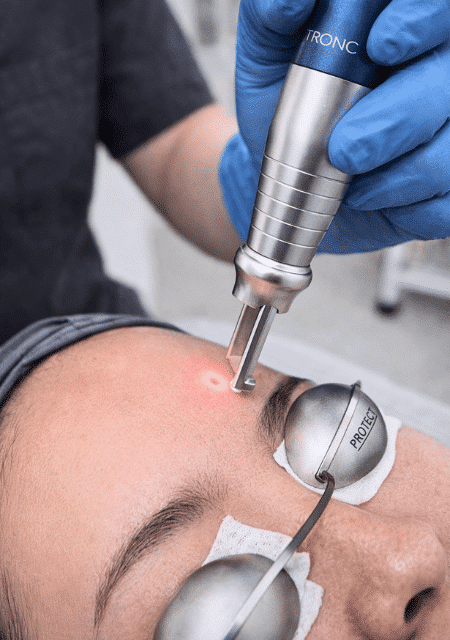
What the treatment process is like
Step 1: Consultation and assessment
A detailed consultation is conducted to assess scar type, skin condition, medical history and suitability for CO2 laser treatment. Expected benefits, limitations, risks and recovery are discussed before proceeding.
Step 2: Skin preparation
The skin is cleansed and topical numbing is applied to enhance comfort.
Step 3: CO2 laser treatment
The laser is delivered using customised settings based on skin needs. Treatment duration varies depending on the area and intensity.
Step 4: Post-treatment care
A soothing mask may be applied after the treatment. Skincare and sun protection will also be applied, and aftercare instructions will be provided.
Step 5: Review and planning
Recovery is monitored, and follow-up sessions will be recommended depending on skin response and goals.
Treatment overview
Treatment area, duration, fequency of treatment and downtime.
Treatable Areas
Face
Duration
~ 1.5 to 2 hours (Including preparation and numbing)
Frequency
~ 4 to 6 weeks, depending on indication
Downtime
~ 5 to 7 days of visible healing; redness may persist longer
Fractional CO2 laser downtime and recovery
This is the part worth planning around. Fractional CO2 laser is not a lunchtime treatment. It involves visible social downtime, typically around 5 to 7 days before most people feel comfortable in public without makeup. Booking it in the week before a wedding, a holiday or a run of client meetings is a common regret, so it is worth working backwards from your calendar before you book.
| Stage | What to expect | How the skin looks and feels |
|---|---|---|
| Day 1 | Immediate post-treatment phase | Marked redness and a sensation similar to strong sunburn. Some swelling, particularly around the eyes. The skin feels hot and tight. |
| Days 2 to 3 | Early healing | Redness deepens towards a bronzed tone and swelling is usually at its most noticeable. The skin feels dry and taut, and a fine grid pattern may become visible. |
| Days 4 to 7 | Crusting and flaking begin to settle | Tiny dark brown dots appear and begin to flake away. The skin feels rough and papery. Do not pick or scrub the skin. Redness and sensitivity can remain though most of the redness settles towards the end of this window. |
| Weeks 1 to 3 | Continuing recovery | Surface healing progresses, while residual redness or sensitivity may gradually settle. Some individuals require longer. Continue the recommended aftercare. Sun protection is extremely important. |
Post-inflammatory hyperpigmentation
Post-inflammatory hyperpigmentation (PIH) is darkening of the skin that can follow inflammation or injury. It is a recognised risk after resurfacing treatment and is an important consideration for Asian skin, particularly darker skin tones and individuals prone to pigmentation after irritation.
PIH may take several months to fade and can sometimes persist longer. Our doctors assess your individual skin tone and pigmentation history when selecting treatment settings. Sun protection, appropriate aftercare and, where suitable, a personalised pigmentation-management plan help reduce the skin.
Aftercare following CO2 laser
In the first week
Keep your routine simple. Use a gentle, non-foaming cleanser with lukewarm water, and pat the skin rather than rubbing it. Use only the products recommended for your stage of healing, and avoid scrubbing, picking or removing crusts. Exfoliating acids, retinoids and other potentially irritating products should remain paused until your doctor advises otherwise.
Contact the clinic immediately if you experience increasing pain, spreading redness, pus, fever or symptoms that differ from the recovery advice provided.
Sun protection in Singapore’s climate
Singapore sits close to the equator, so ultraviolet levels stay high all year and there is no low-UV season to recover in. Protect the treated area from direct sun exposure throughout recovery. Once your doctor confirms the skin is ready for it, use a broad-spectrum sunscreen of SPF 50 or higher, choosing a physical or mineral formula containing zinc oxide or titanium dioxide while the skin is still healing. Reapply every two hours when you are outdoors. A wide-brimmed hat and shade do more work than most people expect, particularly in the first month.
Returning to your normal routine
Actives such as retinoids, vitamin C and acids can go back into your routine, but the timing depends on how your skin has healed rather than on a fixed date. Reintroduce them one at a time on your doctor’s advice, and stop if the skin stings or reddens.
Aftercare instructions will be provided, and our team will follow up closely to monitor recovery and address any concerns. Contact us if you are unsure whether a product or activity is suitable.
How many sessions will I need?
There is no single answer, and any figure quoted before your skin has been assessed is a guess. What determines the number is the type of scarring you have, how deep it sits, how your skin responds to the first session, and how much downtime you can accommodate each time.
Sessions are spaced roughly four to six weeks apart. That gap is not arbitrary. The skin needs to complete its healing cycle before it is treated again, and collagen remodelling continues underneath during that time. Treating sooner adds risk without adding benefit.
It is also worth knowing that improvement does not stop when the course does. Collagen continues to remodel for several months after your final session, so what you see at the end of treatment is not the final result.
Fractional CO2 laser cost in Singapore
The cost of treatment depends on factors such as:
- The size and location of the treatment area
- The treatment approach and complexity
- The number of sessions recommended
- Whether complementary procedures are included in your plan
Aesthetic laser treatments are generally considered elective, which means they are not usually claimable under MediSave or private insurance. Following consultation, our team will explain the recommended plan and associated fees before you proceed.
How CO2 laser compares to other resurfacing options
| Treatment | Primary use | Mechanism | Typical downtime | Best suited to |
|---|---|---|---|---|
| CO2 Laser | Acne scars, texture, fine lines and visible pores | Ablative fractional resurfacing through microscopic columns of controlled thermal injury | ~ 5 to 7 days | Atrophic acne scarring and rough texture, where visible recovery can be accommodated |
| Pico Laser | Pigmentation, acne scars, texture concerns | Predominantly photoacoustic pulses; fractional handpieces create microscopic treatment zones | ~ 3 to 5 days | Selected pigment or textural concerns, and those who need a shorter recovery |
| RF Microneedling Resurfacing | Acne scars, texture, fine lines and selected firmness concerns | Microneedling combined with radiofrequency energy delivered at selected depths | ~ 1 to 3 days | Individuals whose scar, texture or firmness concerns suit RF microneedling |
These treatments address different targets and may be used individually or within a combined plan. Our doctors will assess whether treatments should be performed together or spaced apart. A combination is recommended only when appropriate for your skin.
Our doctors at Cheongdam Aesthetics
Dr Kara-Anne Tan is Cheongdam’s Medical Director. She graduated with an MBBS from the National University of Singapore’s Yong Loo Lin School of Medicine and is fully accredited by the Singapore Medical Council (SMC) Aesthetic Procedures Oversight Committee. She has practised aesthetic medicine since 2017 and has published in international journals.
With CO2 laser, the settings matter more than the device. For Asian skin, which carries a higher baseline risk of post-inflammatory hyperpigmentation, she dials back the energy and density, staging the treatment across more sessions.
Cheongdam has three clinics: International Plaza (Tanjong Pagar MRT), United Square (Novena MRT) and SingPost Centre (Paya Lebar MRT).
Medically reviewed by Dr Kara-Anne Tan, 12 October 2026
Treatment pairings
Combine your CO2 laser treatment with the following procedures to address multiple concerns:
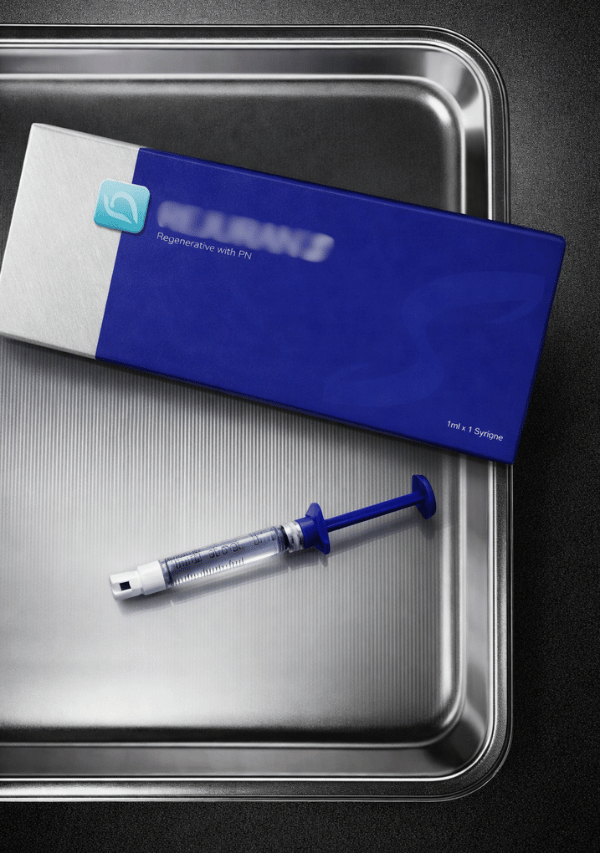
Targeted support for selected depressed acne scars and uneven skin texture

Persistent redness, visible vessels and red post-acne marks

Dermal matrix support and overall skin quality

Skin tightening, volumising and contour refinement
Uncertain about your concerns?
Noticing multiple concerns?
Frequently asked questions
What does CO2 laser treat?
CO2 laser is commonly used to improve acne scars, uneven skin texture, enlarged pores, fine lines and overall skin quality. Our doctors will assess the concern and explain whether resurfacing is suitable for you.
How is CO2 laser different from Pico or Yellow Laser?
CO2 laser is a resurfacing laser that renews the skin through controlled microscopic columns of ablation and controlled heat. Pico Laser uses ultra-short pulses for pigmentation, and for fractional settings, selected scar and textural concerns. Yellow Laser primarily targets vascular redness. Their treatment goals and recovery requirements differ.
Is CO2 laser suitable for Asian skin?
Yes, when it is carefully assessed and customised. Asian and deeper skin tones carry a higher baseline risk of post-inflammatory hyperpigmentation, so settings are optimised, and aftercare is stricter. The section on post-inflammatory hyperpigmentation above explains what that involves in practice. Suitability is confirmed individually at consultation.
Does CO2 laser hurt?
Numbing cream is used to improve comfort. You may still experience heat, prickling or stinging during treatment. Sensations vary depending on treatment intensity.
Can CO2 laser completely remove acne scars?
CO2 laser can significantly improve the appearance of acne scars, but complete removal cannot be guaranteed. Results vary depending on scar type, skin condition and individual response to treatment. In many cases, a combination approach, such as pairing CO2 laser with injectable treatments, may be recommended to achieve more comprehensive and balanced improvement.
How much does fractional CO2 laser cost in Singapore?
Pricing depends on the area treated, the depth of treatment, the severity of your concern and the number of sessions in your plan. The cost section above sets out the current range. Aesthetic laser treatments are generally not claimable under MediSave or insurance. You will be quoted against your own plan at consultation.
When will I see results after CO2 laser?
Some smoothing is usually visible once the skin has finished shedding and the pinkness has settled, so around three to four weeks. The more meaningful change comes later. Collagen remodelling continues for several months after the final session, which is why acne scar results are typically assessed at three to six months rather than immediately.
Can I wear makeup after CO2 laser, and when?
Not immediately. Makeup should be avoided while the skin is still shedding and the surface is open, which is usually the first week. Resume only after the skin surface has healed sufficiently.Applying it too early risks irritation, so follow the timing you are given at your review.
Is CO2 laser safe if I am currently on acne medication?
It depends on the medication. Topical treatments are usually paused for a short period before and after treatment. Inform our doctors about all current and recent medication use, including oral isotretinoin. They will advise whether treatment should proceed, be modified or postponed. Do not stop medication without medical advice.
How do I know if CO2 laser is right for me?
A professional consultation is essential. Our aesthetic doctor will assess your skin condition, discuss your concerns and goals, and determine whether CO2 laser is suitable or if alternative or combination treatments are more appropriate.
Book a consultation
A consultation is an assessment, not a sales appointment. The doctor will look at your skin, discuss what you want to change, and tell you whether CO2 laser is the right tool for you or whether an alternative or combination approach would serve you better. If it is not suitable for you, you will be told that.
Book an appointment or message us on WhatsApp to arrange your visit
| Clinic | Address | Nearest MRT |
|---|---|---|
| International Plaza | 10 Anson Road, #02-36/37, Singapore 079903 | Tanjong Pagar |
| United Square | 101 Thomson Road, B1-56H/56J/56K/56L, Singapore 307591 | Novena |