
Home » Skin Texture & Scarring
Skin texture and
acne scar treatment
in Singapore

A Personalised Approach to Uneven Texture and Scarring
Roughness and acne scars can change how light falls across your skin. At Cheongdam, we assess the skin surface, scar depth and your healing history before recommending treatment.
Your plan may include fractional lasers, RF microneedling, targeted scar treatments or supportive texture care, selected around your concerns and recovery needs.
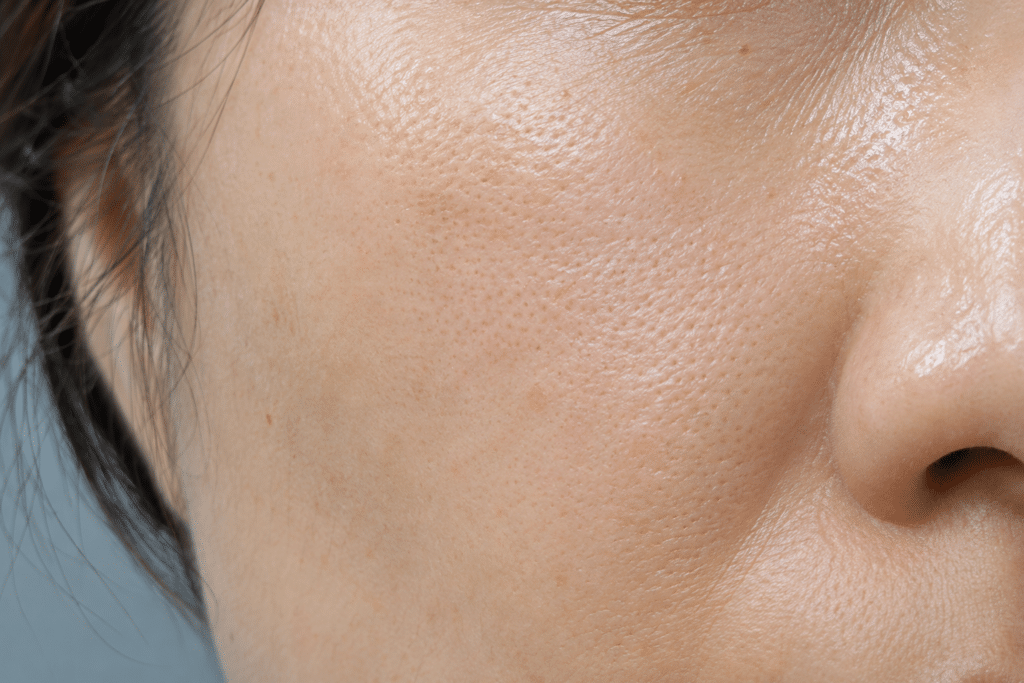
UNDERSTANDING YOUR SKIN TEXTURE AND SCARS
| Concern | What You May Notice |
|---|---|
| Rough or uneven texture | Skin may feel less smooth due to dryness, congestion, sun-related changes or previous inflammation. Persistent roughness needs assessment before resurfacing. |
| Rolling scars | Broad, shallow depressions that create a soft, wavy appearance. Some are held down by fibrous bands beneath the skin. |
| Boxcar scars | Round or oval depressions with more defined edges. Their depth helps determine which treatment may be useful. |
| Ice-pick scars | Small openings that extend into narrow, deeper tracts. Resurfacing alone may have limited effect on these tracts. |
| Raised scars | Firm areas above the skin surface. Hypertrophic scars and keloids need a different medical plan from depressed scars. |
| Flat post-acne marks | Brown or red colour changes without a dent or raised area. Marks and structural scars can occur together. |
Why Texture and Scars Develop
Texture changes can involve the surface, the supporting tissue beneath it, or both. Knowing which is affected helps us choose a useful treatment target.
Inflammation
and Skin Injury
Inflamed acne and other injuries can disrupt the skin. Picking or squeezing adds further injury and increases the chance of scarring.
Changes inCollagen Repair
Healing can leave too little supporting tissue, causing a depression, or excess scar tissue, causing a raised area. Individual healing patterns also matter.
Tetheringbeneath a Scar
Fibrous attachments can hold an area down. Improving the surface may not fully release this underlying pull.
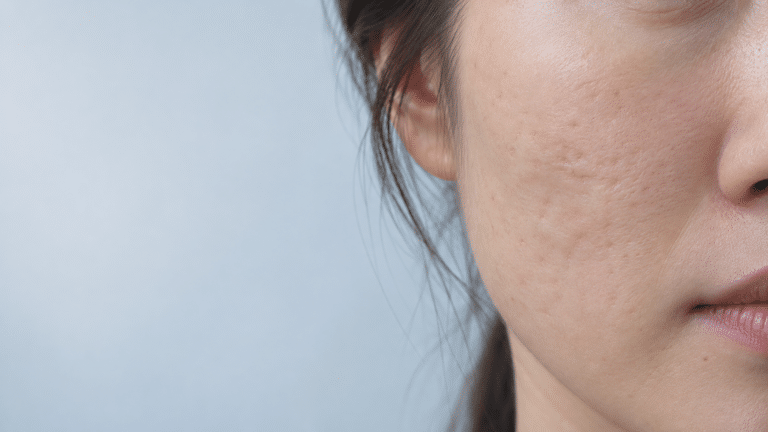
1. Discuss your history. Please tell us about acne, previous procedures, medicines, pigmentation after irritation, cold sores, allergies, unusual healing and any history of keloids.
2. Examine your texture and scars. Your doctor checks shape, depth, edges, skin tone, active inflammation and possible tethering. Photographs or skin imaging may help document your starting point.
3. Agree on a personalised plan. We explain the intended benefit, alternatives, costs, risks and recovery. Different areas may need different approaches, or treatment across separate visits.
4. Review and adjust. We assess your healing and progress before deciding whether to repeat, change or add a treatment.
If acne is still active, controlling new breakouts is an important part of limiting further scarring. Raised, changing, painful or unexplained skin lesions need medical assessment.
Doctor-Led TREATMENTS OPTIONS
| Treatment | What It Does | May Be Considered For | Recovery and Risks |
|---|---|---|---|
| Doctor-Led Laser Treatments | |||
| Fractional Pico Laser | Picosecond pulses delivered into small treatment zones to encourage remodelling. | Selected shallow depressed scars and uneven cheek texture. | Temporary redness, swelling and sometimes fine crusting. |
| Thulium Laser (1927 nm) | Targets water for fractional skin renewal. | Superficial roughness, uneven tone and surface changes alongside scarring. | Redness, dryness, bronzing or fine flaking. |
| Fractional CO2 Laser | Microscopic columns of ablation with surrounding heat prompt healing and collagen remodelling. | Selected boxcar scars and other atrophic textural changes. | Around 5 to 7 days of visible healing, sometimes longer. Pigmentation changes, infection and scarring are recognised risks. |
| Doctor-Led Scar Treatments | |||
| RF Microneedling | Fine needles deliver radiofrequency energy at selected depths to support remodelling. | Selected boxcar or rolling scars and textural irregularity, after assessing depth and tethering. | Redness, swelling and pinpoint bleeding. Possible complications include pigment changes, burns, scarring, fat loss and nerve injury. |
| PN Scar | A polynucleotide (PN) injectable placed in selected areas to support tissue quality. | Localised depressed scars, as an adjunct within a personalised plan. | Injection-site bumps, swelling, tenderness and bruising. It does not release tethering or guarantee a depression will disappear. |
| CureJet Needleless Scar Revision | High-velocity liquid microjets deliver a clinician-selected solution without a conventional needle. | Selected atrophic scars where needle-free delivery is appropriate. | Discomfort, swelling, bruising or pinpoint bleeding. Published scar evidence is limited. |
| Skin Quality and Additional Texture Care | |||
| Skin ReSet ECM Booster | An injectable using processed human-derived acellular dermal matrix from donor skin tissue. | Broader skin quality and roughness, alongside a scar-management plan. | Product-specific risks are explained beforehand. Benefits for deep acne scars are less well established. |
THERAPIST-LED TREATMENTS
| Treatment | What It Does | May Be Considered For | Recovery and Risks |
|---|---|---|---|
| Microneedling | Mechanical needle movement without added RF energy, creating controlled injury and healing. | Selected scars and texture. A superficial cosmetic protocol differs in scope from scar-directed medical needling. | Redness, swelling or pinpoint bleeding. Infection, pigment changes and new scarring are possible. |
| Fractional Skin Resurfacing with EndyMed FSR | A grid of surface electrodes produces fractional micro-ablation with RF heating beneath. It does not insert needles. | Selected roughness and textural concerns, within an appropriate clinical protocol and recovery plan. | Redness, swelling, small crusts and pigmentation changes, with a visible recovery period that needs to be planned. |
RF MICRONEEDLING VS. MICRONEEDLING
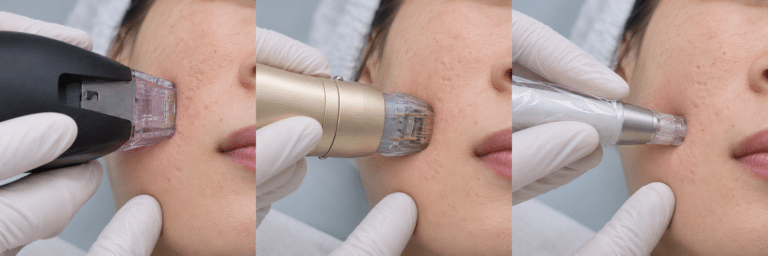
Both use needles, but RF microneedling also delivers thermal energy. The choice depends on your scar pattern, skin condition, treatment depth and tolerance for recovery. More energy or greater depth does not automatically produce a better outcome. The right treatment is the one matched to your concern, with an acceptable risk and recovery profile.
| Feature | Conventional Microneedling | RF Microneedling |
|---|---|---|
| How it works | Mechanical needles create controlled punctures. | Needles create punctures and deliver RF energy into tissue. |
| Added heat | No RF heat. | Controlled RF heating, with settings selected for the treatment area. |
| Treatment depth | Varies with the device and protocol. | Varies with the device and protocol. RF does not automatically mean deeper treatment. |
| Potential role | Selected scars and texture, with an appropriate medical protocol. | Selected scars and texture where thermal remodelling is appropriate. |
| Recovery | Redness, swelling and possible pinpoint bleeding. Timing varies. | Redness, swelling, possible pinpoint bleeding or crusting. Timing varies. |
| Risks to discuss | Infection, pigment changes and scarring. | Needling risks, plus heat-related injury including burns and potential fat or nerve injury. |
| Important limit | Does not reliably release all tethering or correct every deep scar. | Does not reliably release all tethering or correct every deep scar. |
MATCHING THE TREATMENT TO YOUR CONCERN
| Main Concern | Possible Role of the Options Above | What Also Matters |
|---|---|---|
| Roughness or uneven texture | Fractional Pico, Thulium, suitable microneedling or FSR protocols. | Dryness, congestion and sensitivity. |
| Rolling scars | Selected fractional laser or RF microneedling plans, with targeted adjuncts where suitable. | Checking for tethering. Conventional subcision or other medical scar care may be needed. |
| Shallow boxcar scars | Fractional CO2, fractional Pico or RF microneedling, depending on the scar. | Depth, edges, skin tone and healing capacity. |
| Deep boxcar or ice-pick scars | Resurfacing may help surrounding texture but may be insufficient for the deepest part. | Targeted scar procedures or referral may be more appropriate. |
| Raised scars or keloids | A scar-specific medical assessment. | Routine collagen-stimulating resurfacing or needling is not the standard starting plan. |
| Flat red or brown marks | A separate colour-focused plan, sometimes alongside texture care. | Pigment and vascular marks have different targets from structural scars. |
WHY A PLAN MAY USE MORE THAN ONE APPROACH
One cheek can have several scar patterns. A plan may address active acne first, then selected depressed scars, surrounding texture and any remaining colour changes. PN Scar, CureJet or ECM treatment may be considered for a specific role rather than added automatically.
Treatment can be staged across visits. Combining several procedures on the same day is not always appropriate, particularly when the skin needs time to recover.
RECOVERY AND ONGOING CARE
Allow for visible healing
Redness, swelling, dryness, flaking, crusting or bruising depend on the procedure. We discuss recovery before you book, including work, exercise, travel and upcoming events.
Give remodelling time
Changes in scar appearance develop gradually, and assessment usually extends over weeks to months rather than immediately after swelling settles.
Review before repeating
Your next visit depends on how well your skin has healed and responded. A longer recovery interval or a change in approach may be appropriate.
Support Your Skin Between Visits
- Cleanse gently. Follow the cleansing or wound-care instructions for your healing stage. Avoid scrubs, cleansing brushes and rubbing the treated skin.
- Moisturise as directed. Use the recommended moisturiser or protective wound-care product, and keep your routine simple while your skin recovers.
- Protect your skin from the sun. Use shade, a hat and protective clothing. Once your skin is ready, apply a tolerated broad-spectrum SPF 50+ sunscreen and reapply when outdoors.
- Avoid picking and squeezing. Let flakes and crusts detach naturally, as picking can increase irritation, pigment changes, infection and scarring.
- Restart active skincare gradually. Pause exfoliating acids, retinoids and other irritating products for the period advised, and resume them only when cleared for your stage of healing.
- Contact our clinical team if recovery changes. Seek prompt review for worsening pain, spreading redness, pus, blistering, fever or unexpected skin changes, rather than waiting for your next appointment.
Please tell your doctor about current or recent isotretinoin and other medicines, pregnancy or breastfeeding, immune conditions, poor wound healing and any history of cold sores or keloids. Do not stop prescribed medicine without advice.
SKIN TEXTURE AND SCARRING Treatment Cost in Singapore
The cost of treatment depends on your consultation, prescribed care, treatment area and any procedures recommended. Following your assessment, Cheongdam provides a personalised quotation that sets out the total including GST, treatment inclusions and review arrangements.
Why Choose Cheongdam Aesthetics?
Cheongdam combines doctor-led aesthetic care with Korean skin management expertise. We begin by assessing your active breakouts, your skin’s tolerance and your previous treatment response before designing your plan. Your routine and your progress at each review shape every step that follows.
To discuss whether any treatment is appropriate for your skin texture or scarring concerns, book a consultation with our team.
Frequently Asked Questions
Can acne scars be removed completely?
Treatment aims to make scars less noticeable and improve texture. Complete removal and perfectly smooth skin cannot be promised, as the depth, pattern and healing response affect what is achievable.
How are acne scars different from acne marks?
Marks are flat colour changes, such as brown pigmentation or red post-acne marks. Scars change the skin’s contour through a depression or raised tissue. You can have both, so treatment may need to address colour and structure separately.
Which laser is best for acne scars?
There is no single best laser for every scar. Fractional Pico, Thulium and CO2 use different energy delivery and have different treatment roles. Scar depth, tethering, skin tone, pigmentation history and recovery needs guide the choice.
Can Thulium Laser treat deep acne scars?
Thulium may have a role in selected scar and surface-texture plans, but it should not be assumed to correct deep tracts or release tethering. Deep ice-pick or sharply depressed scars may need other treatment techniques.
Is RF microneedling better than conventional microneedling?
RF adds heat, which may be useful for selected concerns but also adds thermal risks. It is not automatically the better choice. Your doctor weighs the intended tissue effect, device, settings and risks against conventional needling or another plan.
Is EndyMed FSR the same as RF microneedling?
No. FSR uses a surface electrode array for fractional micro-ablation and RF heating, while RF microneedling inserts needles to deliver energy within tissue.
Is CureJet non-invasive because it has no needle?
No. A high-velocity liquid jet passes through the skin even though a conventional needle is not used. Discomfort, swelling, bruising and pinpoint bleeding can occur, and the clinical protocol and solution used are important.
How is PN Scar different from Skin ReSet ECM Booster?
PN Scar is a PN injectable used in targeted scar care. Skin ReSet ECM Booster uses processed human-derived dermal matrix and is considered for selected skin-quality concerns. They have different sources, evidence and risks, and are not interchangeable.
How many sessions will I need, and when will I see changes?
Some people need a series of treatments with healing time between visits. A proposed course is discussed after assessment and adjusted to your response. Scar remodelling takes time, and the number of sessions or degree of improvement cannot be guaranteed in advance.
Are these treatments suitable for Asian or darker skin?
Suitability is individual. A history of dark marks after irritation matters because resurfacing can cause post-inflammatory pigmentation. Settings, preparation, aftercare and treatment choice are tailored to your skin, and no procedure is risk-free for every skin tone.
Can I start if I still have active acne?
Inflamed or infected areas may need treatment before resurfacing treatments. Your doctor decides how to manage ongoing acne and existing scars together, including whether a procedure should be postponed.
Book a Skin Texture and Scar Consultation
Discuss your skin texture or acne scar concerns, previous treatments and skin sensitivities with the Cheongdam team.
Your consultation will cover what may help, the recovery involved and the care to continue at home.
| Location | Address | Nearest MRT |
|---|---|---|
| International Plaza | 10 Anson Road, #02-34/35, Singapore 079903 | Tanjong Pagar |
| United Square | 101 Thomson Road, B1-56H/56J/56K/56L, Singapore 307591 | Novena |
| SingPost Centre | 10 Eunos Road 8, #B1-113/114, Singapore 408600 | Paya Lebar |