

XERF is a non-surgical skin tightening treatment that uses dual-frequency monopolar radiofrequency (RF), offering three heating modes called Shallow, Middle and Deep.
At Cheongdam Aesthetics in Singapore, your doctor can plan treatment for face, neck and selected body areas. For the face, your doctor will assess whether loose skin is contributing to early jowls, a softer jawline or changes in the contour under your chin.
The treatment plan is based on the area of concern, your skin thickness and degree of laxity. Your doctor will explain which areas to treat, what the shot count means and how to assess your response.

XERF at a glance
| What to know | XERF skin tightening |
|---|---|
| Technology & Depth | 6.78 MHz and 2 MHz monopolar RF delivered through a handpiece on the skin. Shallow and Middle mode use 6.78 MHz. Deep mode uses 6.78 MHz followed by 2 MHz. |
| Main concern | Loose skin or reduced skin firmness. |
| Treatment areas | Face, neck and selected body areas. |
| Sensation | Built-in cooling helps manage surface heat. You may still feel warmth or pulses of heat. |
| How it works | Multifrequency radiofrequency energy reaches the skin at multiple depths to stimulate fibroblast activity and a collagen remodelling response |
| When results appear | Gradually over 1 to 3 months; as new collagen forms; commonly assessed around the 3-month mark |
| Downtime | Temporary redness or swelling can occur. Recovery varies. |
| How long results last | Small studies assessed results around one and three months after treatment |
| How many treatments? | An initial treatment followed by review; further treatment and maintenance are individualised |
What Is XERF?
XERF applies controlled RF heat through a handpiece placed on the skin. Heating the tissue can trigger collagen remodelling, a process in which collagen fibres change and new collagen can form. That response can contribute to gradual changes in firmness.
How XERF Skin Tightening Works
Shallow, Middle and Deep Modes
| Mode | RF frequency | Typical heating pattern |
|---|---|---|
| Shallow | 6.78 MHz | Mainly in the dermis, the collagen-rich layer beneath the skin’s surface. |
| Middle | 6.78 MHz | From the dermis into the fat just beneath the skin. |
| Deep | 6.78 MHz + 2 MHz | Farther below the skin, where heat can reach deeper supporting tissue. |
Pulse Control and Cooling
Wave Fit Pulse adjusts how energy is delivered. Integrated cryogenic cooling helps limit surface heat. The device checks electrical resistance before treatment and monitors the tip’s surface temperature through the treatment.
XERF Treatment Areas
Full Face: Reduced firmness
Lower Cheeks, Jawline, and Under the Chin:
Loose skin that contributes to early jowls or a softer jawline
Neck: Skin laxity along the neck
Body: Selected areas with loose skin
Who Is XERF Suitable For?
XERF may be considered when loose skin is the main reason an area looks less firm or defined. Your doctor can assess the full face or focus on individual areas, including lower face, neck and selected body areas.
Concerns
Depending on your anatomy and the treatment plan, areas may include:
01
Early Jowls
- Loose skin along the jawline
- Loss of jawline definition
02
Loose Skin Under the Chin
- Less defined under chin
- Submental skin laxity
03
Drooping Cheeks
- Drooping cheeks
- Loss of facial definition
04
Neck Skin Laxity
- Loose skin along the neck
- Fine creases in less firm skin
- Lost of definition
05
Forehead Skin Laxity
- Reduced firmness
- Fine creases at rest
06
Body Skin Laxity
- Loose skin in specific body area
- Skin that lost firmness
A soft jawline or fuller under-chin area can also reflect fat, changes in facial volume or jaw structure. Your doctor assesses how much each factor contributes before recommending treatment.
Who is a good candidate for XERF?
XERF may be worth considering if you:
- Have mild to moderate skin laxity in the area you want treated
- Notice early jowls or softer cheeks or jawline contours where loose skin contributes
- Have reduced firmness across the forehead, under the chin, or along the neck.
- Have localised body skin laxity in an area your doctor assesses as suitable.
- Prefer a non-invasive approach to skin tightening.
- Are comfortable assessing gradual changes over several weeks.
It may be less suitable if you have more advanced laxity or significant excess skin, your doctor will explain how much change in firmness is realistic with non-invasive treatment.
Tell your doctor if you are pregnant or breastfeeding, have a pacemaker or another implant, or have an active skin infection in the treatment area. Share with us details of recent fillers, threads and any energy-based procedures as well.

What Happens During A XERF Session?
At Cheongdam Aesthetics, a XERF session begins with a doctor’s assessment and ends with guidance for the areas treated.
Step 1: Consultation and Pre-Treatment
First, your skin is gently cleansed before a skin analysis is conducted. A thorough consultation with a registered medical professional is carried out before any treatment.
Step 2: Skin Preparation
The treatment area is cleansed and prepared before treatment.
Step 3: Numbing and Comfort Management
XERF is often performed without numbing cream. The handpiece cools the skin during the treatment and your doctor will discuss comfort options.
Step 4: During the Treatment
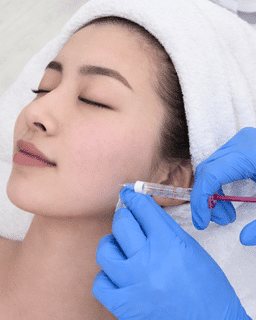
The handpiece delivers RF energy to the treatment areas. You may feel warmth or brief pulses of heat. Let your doctor know if the heat feels too intense.
Step 5: After the Treatment
Temporary redness or swelling can occur. RF heating also carries a risk of burns. Follow the aftercare instructions and contact the clinic if you develop blistering or worsening pain.
When Will I See Results, and How Long Do They Last?
Results depend on the area treated and how your skin responds.
The Results Timeline
Changes in facial firmness can develop over several weeks. Some early tightening and firming may be noticeable early on, but more gradual improvement develops over 2 to 3 months as tissue remodelling progresses. Results vary according to your skin condition and response.
Your doctor will review whether the treatment has addressed your goals before recommending further procedures.
How Long Results Last
Because XERF works by stimulating your own collagen production rather than adding material, results build gradually and are generally maintained with two- to three-times-yearly treatment frequency depending on the individual.
Our doctor may advise on maintenance based on the following factors:
- The area treated
- The degree of skin laxity
- How the skin responds to treatment
- Changes in firmness over time
- Your goals and other planned treatments
XERF Compared With Other Lifting Treatments
Cheongdam Aesthetics offers several lifting and tightening treatments. These treatments use different technologies. The choice depends on your anatomy, concerns and treatment history.
| Treatment | Energy Type | Which Layers It Targets | Typical Session Frequency per Year | Suited To |
|---|---|---|---|---|
| Ultherapy Prime | Multifrequency monopolar RF using 6.78 MHz and 2 MHz | Multiple depths within and beneath the skin, depending on the treatment settings | 2 to 3 sessions | Skin laxity, reduced firmness and loss of contour definition |
| Shurink Ultraformer MPT | High-intensity focused ultrasound (HIFU) with real-time visualisation (MFU-V) | The skin’s collagen-rich layer and deeper supporting tissue,depending on the cartridge used | 3 to 4 sessions | Sagging jawline, neck or cheeks; fine lines; excess facial fat such as a double chin |
| Volnewmer Monopolar RF | Monopolar radiofrequency | Upper and deeper parts of the skin’s collagen-rich layer | 2 to 3 sessions | Skin laxity, reduced firmness and fine lines |
| Ultherapy Prime | Micro-focused ultrasound (MFU) | The skin’s collagen rich layer and deeper supporting tissue beneath the skin (SMAS) | Often 1 session, with maintenance based on reassessment | Mild to moderate skin laxity. Sagging jowls, double chin, cheeks, neck |
Session frequency depends on the treatment area, settings and how your skin responds.
XERF and Ultherapy Prime deliver energy in different ways.
- XERF uses a contact handpiece to heat tissue with radiofrequency; settings can be customised by our doctor depending on the individual.
- Ultherapy Prime combines micro-focused ultrasound with real-time imaging, delivering energy at very accurate micro-focused points, allowing your doctor to visualise tissue layers and select appropriate treatment depth.
Treatment frequency is not determined by focal size alone. Your doctor considers the device, treatment intensity, degree of laxity and previous response when planning further sessions.
The appropriate choice depends on your individual needs. Our doctors may recommend one treatment or complementary approaches at different stages of your treatment plan.
XERF Cost in Singapore
At Cheongdam Aesthetics, XERF starts from S$999. The final cost depends on the treatment areas, the number of shots, and if any other treatments are included.
Book a consultation for a personalised quotation based on your specific areas of concern.
Treatment Pairings
Enhance your XERF treatment by combining it with the following procedures to comprehensively address multiple concerns in a single session:
PN HB Plus
Regenerating • Hydrating

Pigmentation • Uneven Skin Tone

Facial Redness • Visible Vessels

ECM Regeneration • Skin Barrier Support
XERF at Cheongdam Aesthetics
XERF treatments at Cheongdam Aesthetics are carried out following a consultation with a registered medical professional.
XERF treatments are available at United Square (Novena MRT), and SingPost Centre (Paya Lebar MRT). Book a consultation.
Frequently Asked Questions
How soon will I see results from XERF?
Improvement develops gradually, with progress commonly assessed around 2 to 3 months. Some tightening may be visible early on, but the fuller effect builds gradually over the following months as your body produces new collagen. This is a progressive change, not an instant one.
How long do XERF results last?
Published studies show results lasting about 3 to 6 months. Duration varies by treatment area and individual response.
Is XERF painful?
You may feel warmth or brief pulses of heat. Built-in cooling helps manage surface heat and comfort varies with the area and settings.
How much downtime is there?
Downtime is generally minimal. Most people can resume usual activities soon after treatment, but this does not mean there are no side effects. Mild redness or slight swelling is common and typically resolves within a few hours to a few days. Altered sensation or temporary weakness can take weeks to settle.
How is XERF different from Ultherapy Prime?
XERF uses radiofrequency to tighten and refine skin from the surface, while Ultherapy Prime uses focused ultrasound with real-time imaging to lift deeper layers. Together, they target multiple depths and complement each other for enhanced, more comprehensive results.
How many sessions do I need?
Most patients require two to three comprehensive treatments per year, with maintenance recommended to sustain results. Your doctor will confirm what’s right for you at your consultation.
Is XERF suitable for me?
Your doctor assesses skin laxity, tissue thickness, and what is contributing to changes in firmness. Exact suitability depends on the area you want treated and your treatment goals.
How much does XERF cost in Singapore?
XERF cost depends on the areas treated and the treatment plan recommended for you. Our team will confirm exact pricing during your consultation, based on your skin assessment.
Book a Consultation
A XERF consultation helps determine whether the treatment is suitable for your pattern of skin laxity or whether another approach may be more appropriate. Your doctor will discuss your options and what can be realistically achieved.
Book An Appointment or reach us on WhatsApp. XERF treatments are available at
- United Square (Novena MRT)
- SingPost Centre (Paya Lebar MRT)